
10 Early Childhood Development Milestones Every Parent Should Know
Introduction
Early childhood developmental milestones to monitor in the first five years include smiling, sitting up, walking, first words, and social interaction. These markers are physical, cognitive, and emotional domains which indicate healthy growth. Recognizing these, like crawling and speaking, helps parents to track development of their child. Tracking child development milestones supports healthy toddler development and builds readiness skills needed during the preschool age.
Below are 10 key developmental milestones every parent should know:
1. Smiling and Social Responsiveness by 0–3 Months:
At this time, babies start smiling at people by making eye contact and showing joy. This childhood development milestone presents the start of social interaction and attachment, helping to lay the foundation for emotional security.These interactive smiles are key develo okpmental milestones signaling maturing vision and recognition of caregivers, often accompanied by cooing and body movement, which foster bonding and communication.
2. Lifting Head and Tummy Time:
Babies lift their head and push up while on their tummy, which helps to develop neck and upper body strength. These movements are early signs of muscle strength and coordination, setting the stage for sitting and crawling.
? Newborn (0-4 weeks): Briefly lifts head and turns it side-to-side.
? 1 Month: Holds head up for a few seconds while on the tummy.
? 2 Months: Lifts head and chest at a 45-degree angle, often pushing up with arms.
? 3 Months: Raises head 90 degrees, props up on elbows, and holds head steady.
3. Sitting Without Support (6–12 Months):
At this stage, babies gain stability, allowing them to explore by sitting and playing. This newfound stability helps them engage more with their surroundings and develop fine motor skills.
4. Crawling or Scooting (6–12 Months):
Mobility begins at this time, with many babies crawling, although some may skip this stage and go directly to standing. Crawling helps in developing coordination, balance, and strength. Some babies skip crawling altogether and go straight to pulling up.
5. Early Language and Understanding (9–12 Months):
Babies begin to understand simple instructions and say words like “mama” or “dada.” They also start pointing, responding to their name, and following simple instructions, all signs of growing communication skills.
6.Walking (12–18 Months):
Babies take their first steps, gaining confidence in movement. Progress matters more than timing, as every child builds mobility at their own pace.
7. Refining Fine Motor Skills (12–24 Months):
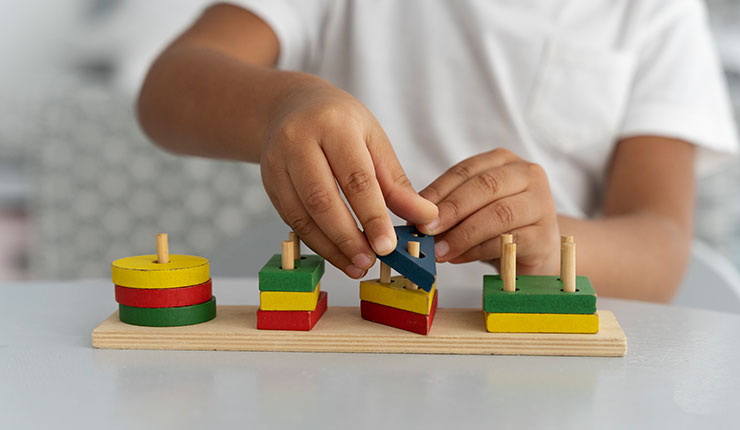
Toddlers begin stacking blocks, turning book pages, and scribbling with crayons. These skills build independence in feeding, dressing, and play.
8. Imitative and Imaginative Play (18–24 Months):
Toddlers' development starts pretending, like talking on a toy phone or acting out routines. This play supports emotional exploration, creativity, and social skills, helping children move from parallel play to cooperative play.
9. Forming Simple Sentences (2–3 Years):
Toddlers experience a language explosion, transitioning from single words to short phrases and can experience preschool activities.
10. Socializing and Sharing (3–5 Years):
Children play with peers, learn turn-taking, and show increased empathy as social awareness grows.
Conclusion
In conclusion, it can be said that every child grows at their own pace, and awareness of child development milestones helps guide toddler development and supports growth throughout the preschool age. These milestones encourage awareness, attentive care, loving interaction, and timely support when needed. Small moments of encouragement today can make a lasting difference in a child’s future.